2000

The first Driver Standards Manager was appointed. Paul Smith was made responsible for managing our fleet of rapid response cars and training our paramedics to drive on blue lights through night-time London quickly and safely.

1999

London’s Air Ambulance Charity and Virgin called for support from the public, in particular the business community of London. “I go back to the benefit to a commercial company of spending some of its profits on a very worthwhile and very public operation. For companies, this is tax deductible stuff,” said Andrew Cameron, Chief Executive of London's Air Ambulance.

5 October 1999

Paddington Train Crash - 5 October 1999

Two trains collided, sadly resulting in 31 deaths and over 220 people being injured. London’s Air Ambulance delivered four advanced trauma teams to the site and helped coordinate the emergency medical response, alongside the London Ambulance Service.

1999

The first rapid response car was introduced and the service expanded into night-time operations. London’s Air Ambulance starts delivering the same medical team and equipment to critically injured people after dusk by road. Initially limited to four nights a week, the night-time operations gradually expanded until the charity started operating 24/7 in 2010.

1999

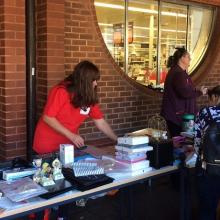
At an improvised stall carried around by Christine Margetts, Medical Secretary to Dr Gareth Davies, umbrellas and baseball caps were available to purchase, with all proceeds going to London’s Air Ambulance Charity. This was the birth of the charity as we know it and Christine continued to work for the charity for the next 20 years.

1998

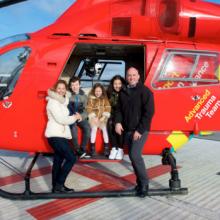
The service attained a new helicopter: the Dauphin is replaced by MD902 Explorer. This model was chosen for its safety features, which include no tail rotor (important in an urban environment). 

1997

Virgin got on board. “I realised it was time to pay back,” said Richard Branson, revealing in a press release that he had been rescued by emergency helicopters five times. London’s Air Ambulance now had the backing of a powerful PR mogul as well as vital financial support from Virgin Group.

Virgin purchased the helicopter from the Daily Express and covered the operational costs.

Image: London's Air Ambulance helicopter livery reflects Virgin's sponsorship of the charity

January 1997

The media debate over proposed funding cuts, which would have shut down London’s Air Ambulance, stirred emotion. The public, once again, voiced their concerns and showed their support for the service.

1996

Dr Gareth Davies became Medical Director of London's Air Ambulance. In the same year, Prof Tim Coats became a consultant for the service. Tim was the first senior lecturer in A&E and pre-hospital care in the UK. 

Image: Dr Gareth Davies (photo 2015) and Prof Tim Coats

1996

Patients and the public came to the rescue. A media battle ensued after medical professionals voiced criticism in the national media, with some of the patients saved by London’s Air Ambulance approaching journalists to tell their stories.

Subscribe to